Passengers face widespread delays, cancellations and rerouting.
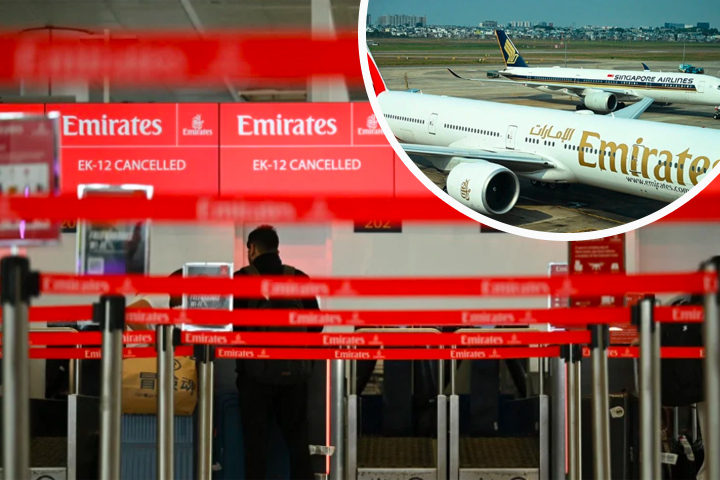
Global air travel remained severely disrupted on March 17 after the war in Iran forced the closure or restriction of major Middle Eastern aviation hubs, including Dubai, Doha, and Abu Dhabi, triggering widespread flight cancellations and leaving tens of thousands of passengers stranded.
Airlines across Europe, North America, and Asia suspended flights to key destinations in the Gulf and Israel, citing security risks and unstable airspace conditions.
Greek carrier Aegean Airlines said on its website that flights to Tel Aviv, Beirut, and Amman were canceled until April 22, while services to Erbil and Baghdad were halted until May 24. Flights to Dubai were suspended until April 19, and to Riyadh until April 18.
Air Canada said in a March 13 statement that flights to Dubai were canceled through April 30 and to Tel Aviv through May 2. In a March 17 update, Air Canada said, “The situation in the Middle East continues to evolve, so we’ve introduced a flexible booking policy so you can adjust your booking in the way that best meets your needs for your upcoming planned travel to or from Dubai and Tel Aviv.”
U.S. carrier Delta Air Lines warned that travel to, from, or through Tel Aviv could be affected until April 30 due to the security situation.
Israel’s national airline, El Al, said on its website that regular flights are canceled until March 21, adding that it is operating at only 20 percent of its flight capacity.
Japan Airlines suspended services from Tokyo to Doha until March 31 and return flights until April 1, saying operations would remain halted until “sufficient safety measures are ensured under the current situation in the Middle East,” according to a March 16 operational update.
The Lufthansa Group said it would suspend flights to Dubai, Abu Dhabi, Amman, and Erbil until March 28; to Tel Aviv until April 9; to Beirut until March 28; to Tehran until April 30; and to Riyadh until April 5.
The group, operating Lufthansa, SWISS, ITA Airways, Austrian Airlines, and Eurowings, said the restrictions were driven by “massive restrictions on air traffic,” including airport capacity limits in Dubai.
Spain’s Air Europa on March 16 said it had halted Tel Aviv services until April 10.
A March 16 update from Air France said the airline had canceled flights to Tel Aviv and Beirut until March 21, and to Dubai and Riyadh until March 20.
KLM suspended flights to Riyadh, Dammam, and Dubai until March 28, and halted Tel Aviv services through April 11.
British Airways said on March 16 it had extended reductions to its regional flight schedule due to “continuing uncertainty” and airspace instability, adding that it had helped thousands of customers return home and had operated relief flights from Oman.
The airline said it was in direct contact with affected passengers and continuing to review the situation.
Turkish Airlines granted passengers flexible travel options for flights to multiple countries across the region, including Bahrain, Iran, Iraq, Jordan, Kuwait, Lebanon, Oman, Qatar, Saudi Arabia, and the United Arab Emirates, for travel dates through April 30.