Israel said that “significant surprises are expected throughout this day on all the fronts.”
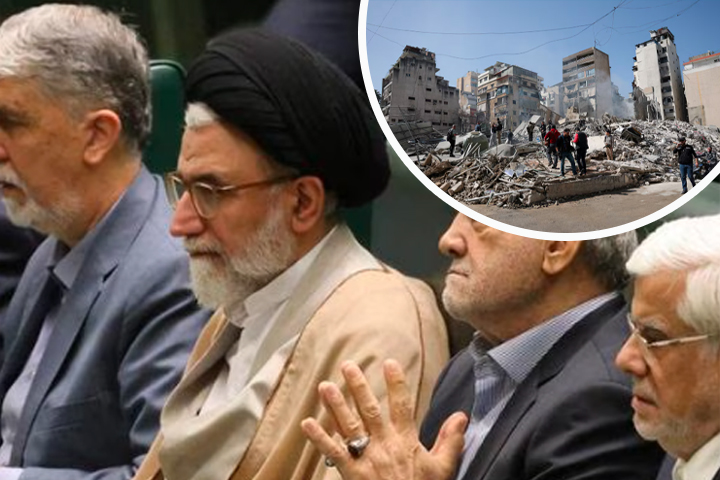
DUBAI, United Arab Emirates—Israel’s defense minister said on Wednesday that the Israeli military killed Iranian Intelligence Minister Esmail Khatib.
Israel Katz announced Khatib’s killing and said that “significant surprises are expected throughout this day on all the fronts,” without elaborating.
Khatib’s killing follows Israel's killing of top Iranian security official Ali Larijani and the head of the paramilitary Revolutionary Guard’s all-volunteer Basij force.
The U.S. Treasury had sanctioned Khatib in 2022, over the Intelligence Ministry “engaging in cyber-enabled activities against the United States and its allies.”
Khatib “directs several networks of cyber threat actors involved in cyber espionage and ransomware attacks in support of Iran’s political goals,” the Treasury said at the time.
The Treasury also called Iran’s Intelligence Ministry in another round of sanctions “one of the Iranian government’s main security services, which is responsible for serious human rights abuses.”
“Under his leadership, the (Intelligence Ministry) has cracked down on a large number of human rights defenders, women's rights activists, journalists, filmmakers, and members of religious minority groups,” it said.
The Intelligence Ministry “has also aggressively persecuted individuals reporting on human rights abuses and violations in Iran, as well as their families, and subjected detainees to torture in secret detention centers during his tenure.”
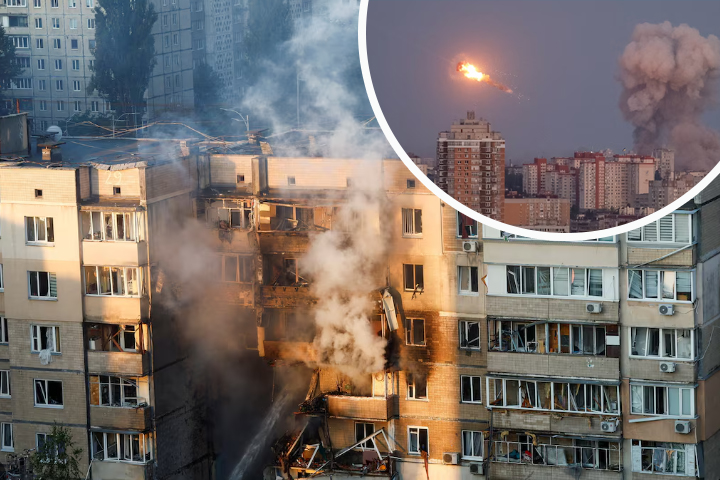
Israel kept up intense pressure on Lebanon with strikes it said targeted Iran-backed Hezbollah terrorists, hitting multiple apartment buildings in Beirut and killing at least a dozen people.
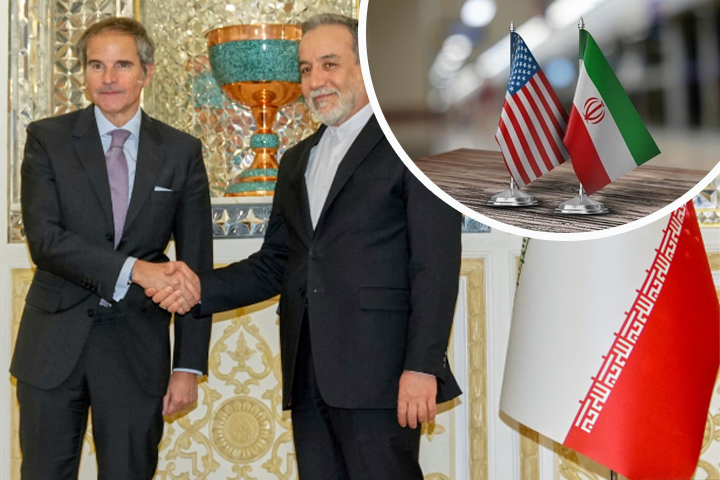
In Iran, the Bushehr nuclear power plant complex was hit by a projectile the night before but there were no injuries, and the plant suffered no damage, the International Atomic Energy Agency said after receiving a report from Tehran. The IAEA chief Rafael Grossi reiterated his call “for maximum restraint during the conflict to prevent risk of a nuclear accident.”